
Difference Between UVA and UVB Rays: Effects, Risks & Skin Protection Guide
Learn the difference between UVA and UVB rays, how they affect your skin, cause aging and sunburn, and the best ways to protect your skin with proper sun care.
DERMASKIN
6/25/20263 min read
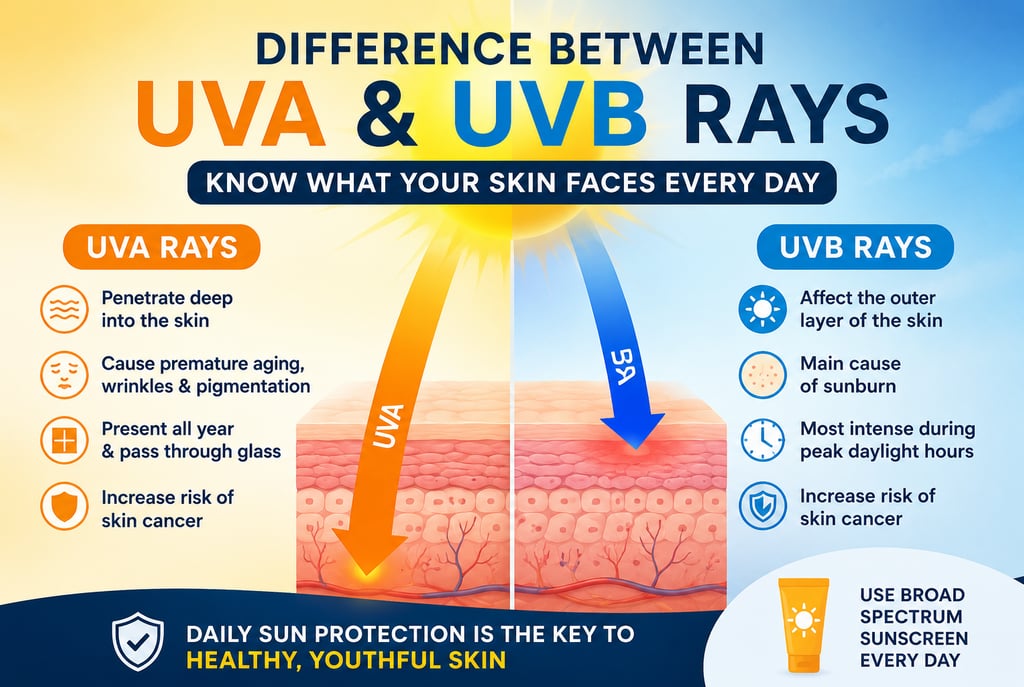
Sunlight is essential for life, but prolonged exposure to ultraviolet (UV) radiation can have harmful effects on the skin. Many people know that the sun can cause tanning and sunburn, but fewer understand the difference between UVA and UVB rays and how each affects skin health. Knowing these differences can help you make better decisions about sun protection and maintain healthy skin throughout the year.
What Are UV Rays?
Ultraviolet (UV) rays are invisible rays emitted by the sun. They are divided into three categories:
UVA Rays
UVB Rays
UVC Rays
Fortunately, UVC rays are mostly absorbed by the Earth's atmosphere and do not reach the skin. However, UVA and UVB rays reach the Earth's surface and can significantly affect skin health.
What Are UVA Rays?
UVA rays have a longer wavelength and can penetrate deeper into the skin. They account for approximately 95% of the UV radiation that reaches the Earth's surface.
Key Characteristics of UVA Rays
Present throughout the year, regardless of weather conditions.
Can penetrate clouds and glass windows.
Reach the deeper layers of the skin (dermis).
Responsible for premature skin aging.
Contribute to wrinkles, fine lines, and pigmentation.
UVA rays are often referred to as "aging rays" because they accelerate the breakdown of collagen and elastin, leading to early signs of aging.
What Are UVB Rays?
UVB rays have a shorter wavelength and primarily affect the outer layer of the skin (epidermis). These rays are stronger during midday hours and summer months.
Key Characteristics of UVB Rays
Cause sunburn and skin redness.
Affect the skin's surface layers.
Play a major role in skin cancer development.
Vary according to season, altitude, and time of day.
Stimulate vitamin D production in the skin.
UVB rays are commonly known as "burning rays" because they are the primary cause of sunburn.
UVA vs UVB Rays: Quick Comparison
FeatureUVA RaysUVB RaysWavelengthLongerShorterSkin PenetrationDeep into dermisOuter epidermisMain EffectAging and pigmentationSunburnPresent Year-RoundYesVaries by seasonPass Through GlassYesMostly NoCancer RiskYesYesNicknameAging RaysBurning Rays
How Do UVA and UVB Rays Affect Skin?
Effects of UVA Rays
Long-term exposure to UVA radiation may lead to:
Premature aging
Wrinkles and fine lines
Hyperpigmentation
Uneven skin tone
Loss of skin elasticity
Increased risk of skin cancer
Because UVA rays penetrate deeply, damage can accumulate over time without obvious symptoms.
Effects of UVB Rays
Excessive UVB exposure can cause:
Sunburn
Redness and inflammation
Skin peeling
DNA damage in skin cells
Increased risk of skin cancer
UVB damage is usually more noticeable because symptoms often appear shortly after sun exposure.
Which Is More Harmful: UVA or UVB?
Both UVA and UVB rays can harm the skin, but they do so in different ways.
UVA rays cause long-term skin damage and premature aging.
UVB rays cause immediate damage such as sunburn.
Both increase the risk of skin cancer.
Therefore, effective sun protection should guard against both UVA and UVB radiation.
How to Protect Your Skin from UVA and UVB Rays
1. Use Broad-Spectrum Sunscreen
Choose a broad-spectrum sunscreen that protects against both UVA and UVB rays. Look for:
SPF 30 or higher
PA+++ or PA++++ protection
Water-resistant formulas if spending time outdoors
2. Reapply Sunscreen Regularly
Sunscreen should be reapplied every two to three hours, especially after sweating or swimming.
3. Wear Protective Clothing
Protective measures include:
Full-sleeved clothing
Wide-brimmed hats
UV-protective sunglasses
4. Avoid Peak Sun Hours
The sun's UV intensity is usually strongest between 10 AM and 4 PM. Limiting exposure during these hours can reduce skin damage.
5. Seek Shade
Whenever possible, stay in shaded areas during prolonged outdoor activities.
Frequently Asked Questions (FAQs)
Do UVA rays cause tanning?
Yes. UVA rays penetrate deep into the skin and are largely responsible for tanning and pigmentation.
Do UVB rays cause sunburn?
Yes. UVB rays primarily affect the skin's outer layer and are the main cause of sunburn.
Can UVA rays pass through windows?
Yes. UVA rays can penetrate glass, which is why sun protection is important even indoors near windows or while driving.
Does sunscreen protect against both UVA and UVB rays?
Only broad-spectrum sunscreens provide protection against both UVA and UVB radiation.
Can UV rays damage skin on cloudy days?
Yes. UVA rays can penetrate clouds, and UV exposure can occur even when the sun is not visible.
Conclusion
Understanding the difference between UVA and UVB rays is essential for maintaining healthy skin. While UVA rays contribute to premature aging, pigmentation, and long-term skin damage, UVB rays are primarily responsible for sunburn and direct DNA damage. Both types of UV radiation can increase the risk of skin cancer, making daily sun protection a crucial part of any skincare routine.
Using a broad-spectrum sunscreen, wearing protective clothing, and limiting excessive sun exposure can help protect your skin from the harmful effects of UV radiation. By taking preventive measures today, you can support healthier, younger-looking skin in the years to come.
Dermacore
3/285, Vivek Khand, Near Neelkanth Sweets, Gomti Nagar, Lucknow, 226010-U.P.
☏ 6386858427, 7607999766
✉ support@dermacore.in