
Fungal Skin Infection Prevention & Treatment in Lucknow | Dr. Aliza Zaidi
Meta Description: Learn about fungal skin infection causes, symptoms, prevention, and effective treatment options by Dr. Aliza Zaidi, expert dermatologist in Gomti Nagar, Lucknow. Get expert tips for healthy, infection-free skin.
DERMASKIN
5/29/20264 min read
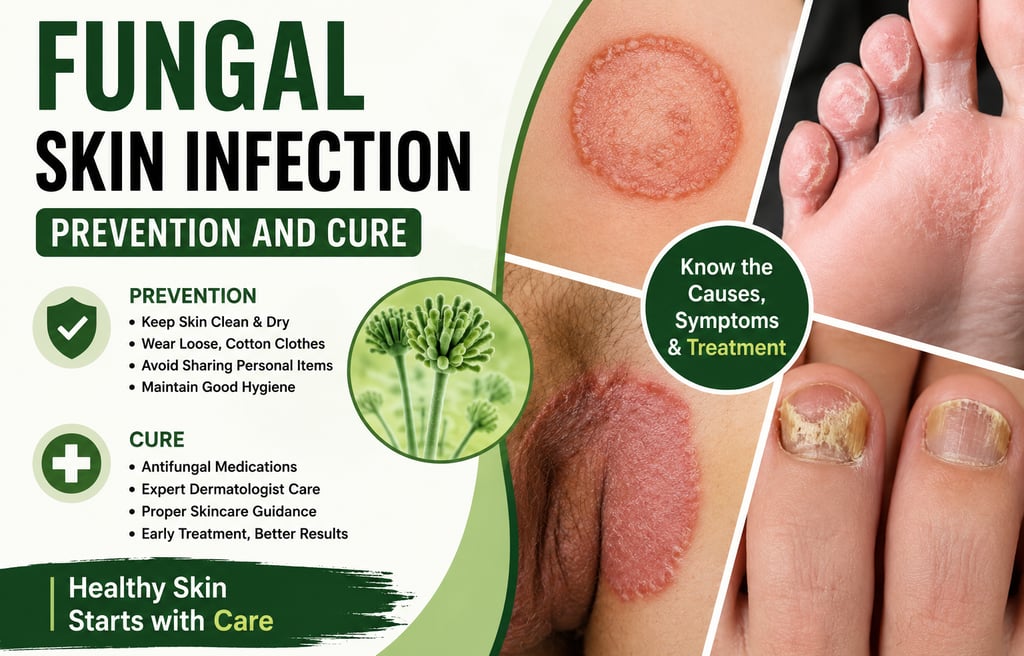
Fungal skin infections are among the most common skin problems affecting people of all ages. These infections are caused by fungi that grow on the skin, nails, or scalp, especially in warm and humid conditions. In India, fungal infections become more common during summer and monsoon seasons due to excessive sweating, humidity, and poor ventilation. While fungal infections are usually not dangerous, they can cause severe itching, redness, discomfort, and may spread quickly if left untreated.
According to Dr. Aliza Zaidi, a leading skin specialist in Gomti Nagar, Lucknow, early diagnosis and proper treatment are essential to prevent fungal infections from becoming chronic or recurring.
What is a Fungal Skin Infection?
A fungal skin infection occurs when fungus grows excessively on the surface of the skin. Fungi naturally exist in the environment and even on the human body, but certain conditions allow them to multiply rapidly and cause infection.
These infections commonly affect areas that remain warm and moist, such as:
Groin area
Underarms
Feet
Scalp
Nails
Skin folds
Fungal infections are contagious and can spread through direct skin contact, contaminated clothing, towels, footwear, or shared surfaces.
Common Types of Fungal Skin Infections
1. Ringworm (Tinea Corporis)
Ringworm is a circular, red, itchy rash that spreads outward. Despite the name, it is not caused by worms but by fungus.
2. Athlete’s Foot (Tinea Pedis)
This fungal infection affects the feet, especially between the toes. It causes itching, peeling, burning sensation, and cracked skin.
3. Jock Itch (Tinea Cruris)
Common in men, this infection affects the groin and inner thigh region, causing redness and intense itching.
4. Fungal Nail Infection
Fungal infection can make nails thick, brittle, yellow, and difficult to trim.
5. Scalp Fungal Infection
This affects the scalp and may lead to dandruff-like flakes, itching, and even hair loss in severe cases.
Causes of Fungal Skin Infection
Several factors increase the risk of fungal infections. Some common causes include:
Excessive sweating
Poor hygiene
Wearing tight clothing
Humid weather conditions
Sharing towels or personal items
Weak immune system
Diabetes
Obesity
Prolonged use of antibiotics or steroids
People who frequently visit gyms, swimming pools, or public washrooms are also at higher risk of developing fungal infections.
Symptoms of Fungal Infection
The symptoms may vary depending on the type and severity of infection. Common signs include:
Persistent itching
Red or circular rashes
Burning sensation
Peeling or cracked skin
White flaky patches
Discoloration of nails
Skin irritation
Bad odor from affected areas
If symptoms continue for more than a few days or keep recurring, consultation with a dermatologist is highly recommended.
How Fungal Infections Spread
Fungal infections spread very easily from one person to another. The infection may spread through:
Skin-to-skin contact
Sharing clothes, socks, shoes, or towels
Sweaty and damp environments
Infected pets or animals
Public gyms and swimming pools
Scratching the infected area can also spread fungus to other body parts.
Prevention Tips for Fungal Skin Infection
Preventing fungal infection is easier than treating recurrent infections. Following proper hygiene and skincare habits can significantly reduce the risk.
Keep Skin Dry
Fungi thrive in moist environments. Always keep your skin dry, especially after bathing or sweating.
Wear Loose Cotton Clothes
Avoid tight-fitting synthetic clothing. Cotton fabrics allow proper airflow and reduce sweating.
Maintain Personal Hygiene
Take regular baths and wash sweat-prone areas carefully.
Avoid Sharing Personal Items
Do not share towels, socks, shoes, razors, or undergarments.
Change Clothes Frequently
Change sweaty clothes and undergarments immediately after exercise or outdoor activities.
Use Antifungal Powder
Using antifungal dusting powder in sweaty areas can help prevent fungal growth.
Keep Feet Clean
Wash and dry feet properly, especially between the toes.
Boost Immunity
Healthy diet, hydration, proper sleep, and exercise help strengthen the immune system.
Treatment Options for Fungal Skin Infection
Treatment depends on the type, severity, and duration of the infection. Mild infections may respond to topical medications, while severe or recurrent infections may require oral treatment.
Antifungal Creams
Dermatologists commonly prescribe antifungal creams, lotions, or powders to stop fungal growth and relieve itching.
Oral Antifungal Medicines
For severe or long-standing infections, oral antifungal tablets may be necessary.
Medicated Shampoos
Scalp fungal infections often require antifungal shampoos along with medicines.
Nail Infection Treatment
Nail fungal infections may require prolonged treatment because nails grow slowly.
Lifestyle Changes
Proper hygiene, loose clothing, and avoiding moisture are equally important for complete recovery.
Self-medication and steroid creams should be avoided because they can worsen the infection and make treatment more difficult.
Why Fungal Infections Keep Coming Back
Many people suffer from recurrent fungal infections due to incomplete treatment or poor lifestyle habits. Common reasons include:
Stopping medicines too early
Using steroid-containing creams
Reusing infected clothes
Excessive sweating
Not treating family members if infected
Poor hygiene practices
Consulting an experienced dermatologist ensures accurate diagnosis and long-term management.
When Should You Visit a Dermatologist?
You should consult a skin specialist if:
The infection spreads rapidly
Home remedies are not working
Severe itching or pain occurs
Nails or scalp are affected
Infection keeps returning
Skin becomes swollen or infected
Early treatment can prevent complications and faster healing.
Expert Skin Care Guidance in Gomti Nagar Lucknow
If you are suffering from persistent fungal infection, professional skin consultation can help identify the root cause and provide effective treatment. Dr. Aliza Zaidi, an experienced dermatologist in Gomti Nagar, Lucknow, offers personalized treatment plans for fungal skin infections, itching, scalp infections, nail fungus, and other skin conditions.
With proper medical care, lifestyle modifications, and preventive measures, fungal infections can be treated effectively and recurrence can be minimized.
Conclusion
Fungal skin infections are common but highly manageable when diagnosed early. Maintaining good hygiene, keeping the skin dry, and seeking timely treatment are the key steps for prevention and cure. Avoid self-medication and always follow dermatologist-recommended treatment for complete recovery.
For expert diagnosis and advanced fungal infection treatment, consult Dr. Aliza Zaidi in Gomti Nagar, Lucknow, and take the first step toward healthier and infection-free skin.
Dermacore
3/285, Vivek Khand, Near Neelkanth Sweets, Gomti Nagar, Lucknow, 226010-U.P.
☏ 6386858427, 7607999766
✉ support@dermacore.in