
Glass Skin Trend – Is It Really Achievable for Indian Skin?
Glass Skin Trend for Indian skin explained. Learn if glass skin is possible, its benefits, myths, and expert skincare tips by Dermacore for healthy glowing skin.
DERMA
4/9/20263 min read
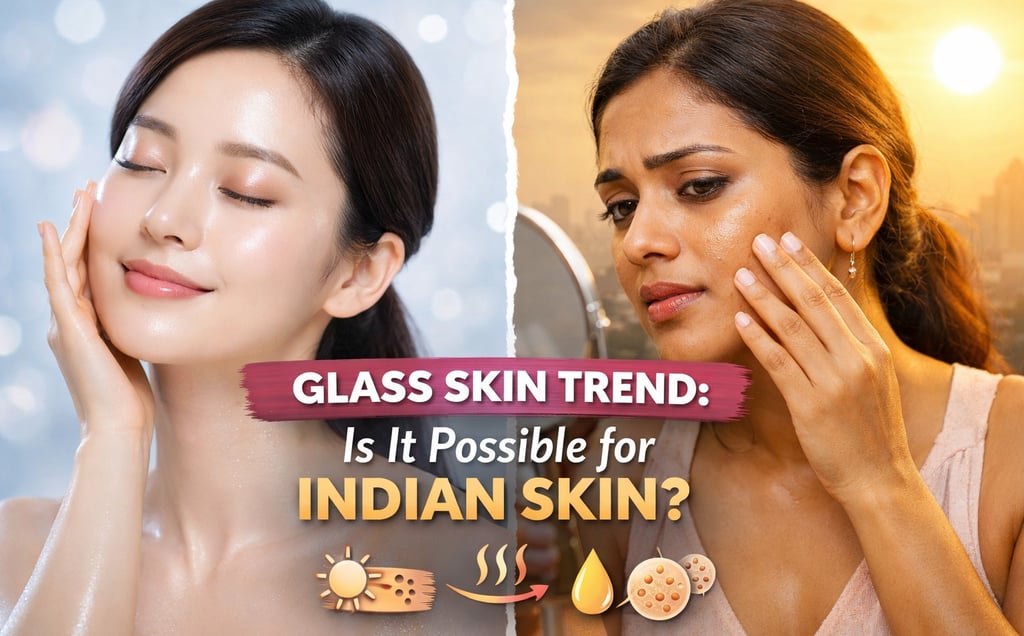
The beauty industry is constantly evolving, and one trend that has captured global attention is the “Glass Skin” look. Originating from Korean skincare culture, this trend focuses on achieving skin that appears clear, luminous, smooth, and almost reflective like glass.
While it looks stunning on social media, many people in India wonder — can Indian skin actually achieve glass skin?
Let’s explore the reality behind this trend and what it truly means for Indian skin types.
Understanding the Concept of Glass Skin
Glass skin is not just about applying makeup or using a single product. It represents deeply hydrated, well-nourished, and balanced skin that reflects light evenly.
This look is typically achieved through:
Consistent skincare routines
Multiple layers of hydration
Gentle exfoliation
Strong skin barrier health
It is more of a long-term skin condition than a quick beauty hack.
Why the Trend Looks So Perfect Online
Social media has played a huge role in making glass skin appear flawless and effortless. However, what we often see is not always the full truth.
In many cases, the final result is influenced by:
Professional lighting
Camera filters
Makeup techniques
Naturally low-texture skin
This creates an illusion of perfection that may not be realistic for everyone.
Characteristics of Indian Skin
To understand whether glass skin is achievable, it is important to consider how Indian skin behaves.
1. Higher Melanin Levels
Indian skin naturally contains more melanin, which offers some protection against sun damage. However, it also increases the chances of:
Hyperpigmentation
Uneven skin tone
Dark spots
2. Oilier Skin Types
Many Indians have combination to oily skin, which can lead to:
Acne breakouts
Enlarged pores
Excess shine
This makes the “poreless” look of glass skin harder to maintain.
3. Environmental Challenges
Factors like pollution, heat, and humidity play a major role in skin health in India. These conditions often result in:
Clogged pores
Sweat-related irritation
Dullness
Because of these factors, skincare routines need to be adapted rather than copied.
Can Indian Skin Achieve Glass Skin?
The Real Answer: Partially Yes, But Not Exactly
Achieving the exact “glass-like” finish — completely poreless, ultra-smooth, and reflective — is not realistic for most Indian skin types. Genetics and environment play a big role in this.
However, the core idea behind glass skin — healthy, glowing, and hydrated skin — is absolutely achievable.
Instead of chasing perfection, the focus should be on improving overall skin health.
Common Mistakes People Make
Many individuals try to follow Korean skincare routines exactly, which can lead to skin issues rather than improvements.
Overuse of Products
Layering too many serums and essences can:
Block pores
Trigger acne
Weaken the skin barrier
Excessive Exfoliation
Using acids frequently can damage the skin and cause:
Sensitivity
Redness
Increased pigmentation
Ignoring Indian Skin Needs
Indian skin requires targeted care for:
Sun protection
Oil balance
Pigmentation control
Skipping these essentials can worsen skin concerns.
A Practical Approach for Indian Glass-Like Glow
At Dermacore, the goal is not to copy trends but to adapt them scientifically for Indian skin.
1. Hydration is the Key
Healthy glow comes from hydration, not oiliness. Use:
Lightweight moisturizers
Hydrating serums
This helps maintain softness and natural radiance.
2. Controlled Exfoliation
Exfoliate gently once or twice a week to:
Remove dead skin cells
Improve texture
Enhance brightness
Avoid harsh scrubs or daily acid use.
3. Treat Pigmentation Early
Pigmentation is one of the biggest concerns for Indian skin. Ingredients like:
Niacinamide
Vitamin C
help in improving skin tone and clarity over time.
4. Never Skip Sunscreen
Sun protection is the foundation of healthy skin. Without it, achieving any kind of glow is difficult.
Daily sunscreen use helps prevent:
Tanning
Dark spots
Premature aging
5. Consider Dermatological Treatments
For faster and more noticeable results, professional treatments can help:
Chemical peels
Hydration-based facials
Laser treatments
Skin rejuvenation therapies
These improve overall skin quality and enhance natural glow.
Setting Realistic Skin Goals
Instead of aiming for unrealistic perfection, Indian skin should focus on achievable outcomes:
✔ Clear and healthy skin
✔ Even complexion
✔ Soft and smooth texture
✔ Natural glow
✔ Reduced acne and spots
These goals are practical and sustainable in the long run.
Final Thoughts
The glass skin trend is inspiring, but it should not be followed blindly. Every skin type is different, and Indian skin has its own unique needs.
While achieving a perfectly poreless, reflective look may not be possible, achieving healthy, glowing, and radiant skin definitely is.
Dermacore
3/285, Vivek Khand, Near Neelkanth Sweets, Gomti Nagar, Lucknow, 226010-U.P.
☏ 6386858427, 7607999766
✉ support@dermacore.in