
Understanding Your Skin Type: Oily, Dry, Combination, or Sensitive Skin
Learn how to identify oily, dry, combination, and sensitive skin types. Discover skincare tips, common signs, and expert guidance for healthier skin.
SKINDERMA
6/12/20263 min read
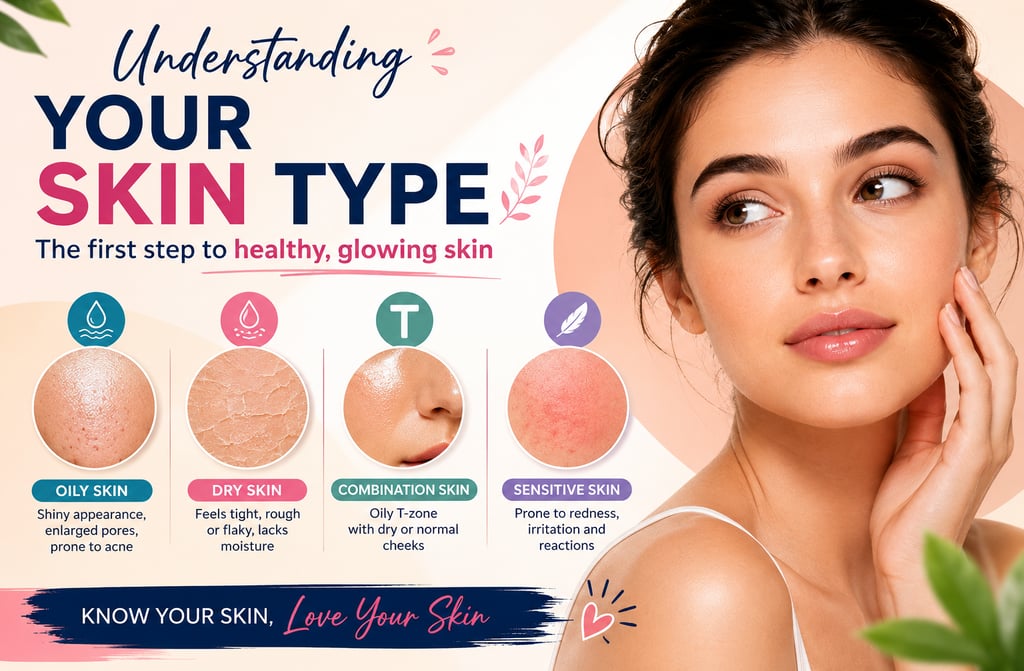
Healthy skin begins with understanding your skin type. Many people invest in expensive skincare products without knowing whether those products are suitable for their skin. Using the wrong products can lead to acne, irritation, dryness, excess oil production, and other skin concerns. Identifying your skin type is one of the most important steps in creating an effective skincare routine.
According to skincare experts, including dermatologists such as Dr. Aliza Zaidi in Gomti Nagar, Lucknow, knowing your skin type helps you choose the right cleansers, moisturizers, sunscreens, and treatment products. Let's explore the four major skin types: oily, dry, combination, and sensitive skin.
What Determines Your Skin Type?
Your skin type is influenced by several factors, including genetics, age, hormones, climate, lifestyle, and skincare habits. While some people naturally produce more oil, others may have skin that struggles to retain moisture. Environmental conditions such as heat, humidity, pollution, and sun exposure can also affect how your skin behaves.
Although your skin type may change slightly over time, understanding its basic characteristics can help you make better skincare decisions.
Oily Skin
Oily skin occurs when the sebaceous glands produce excess sebum. Sebum is a natural oil that helps protect and moisturize the skin, but too much of it can create problems.
Signs of Oily Skin
Shiny or greasy appearance, especially on the forehead, nose, and chin
Enlarged pores
Frequent acne breakouts
Blackheads and whiteheads
Makeup tends to slide off quickly
How to Care for Oily Skin
People with oily skin should avoid harsh cleansers that strip away all natural oils. When skin becomes overly dry, it may actually produce even more oil to compensate. Use a gentle foaming cleanser, oil-free moisturizer, and non-comedogenic sunscreen. Regular cleansing and lightweight skincare products can help control excess shine while maintaining skin health.
Dry Skin
Dry skin lacks sufficient moisture and natural oils. This skin type often feels tight and uncomfortable, particularly after washing.
Signs of Dry Skin
Tightness after cleansing
Rough or flaky patches
Dull complexion
Itching or irritation
Fine lines may appear more noticeable
How to Care for Dry Skin
Hydration is essential for dry skin. Choose mild cleansers that do not remove natural oils. Moisturizers containing ingredients such as hyaluronic acid, glycerin, ceramides, and shea butter can help restore the skin barrier. Avoid excessively hot water while bathing, as it can further dry the skin.
Applying moisturizer immediately after washing can help lock in moisture and keep the skin soft throughout the day.
Combination Skin
Combination skin is one of the most common skin types. People with combination skin experience both oily and dry areas on the face.
Typically, the T-zone (forehead, nose, and chin) is oily, while the cheeks and outer areas of the face remain normal or dry.
Signs of Combination Skin
Oily forehead, nose, and chin
Dry or normal cheeks
Occasional breakouts in the T-zone
Pores may appear larger in oily areas
Different areas of the face have different skincare needs
How to Care for Combination Skin
Combination skin requires balance. Use gentle skincare products that address oiliness without over-drying other areas. Lightweight moisturizers often work well for this skin type. Some individuals may benefit from applying different products to different parts of the face depending on their specific needs.
A consistent skincare routine can help maintain a healthy balance between oily and dry areas.
Sensitive Skin
Sensitive skin reacts easily to environmental factors, skincare products, fragrances, or certain ingredients. This skin type may experience redness, irritation, burning, or itching more frequently than other skin types.
Signs of Sensitive Skin
Redness and irritation
Burning or stinging sensation
Frequent allergic reactions
Skin becomes irritated after trying new products
Increased sensitivity to weather changes
How to Care for Sensitive Skin
People with sensitive skin should choose fragrance-free, alcohol-free, and hypoallergenic products whenever possible. Patch testing new products before full application can help prevent unwanted reactions.
Avoid excessive exfoliation and harsh treatments. Gentle skincare routines with soothing ingredients such as aloe vera, niacinamide, and ceramides are often beneficial.
How to Identify Your Skin Type at Home
A simple way to determine your skin type is the "bare-face test."
Wash your face with a gentle cleanser.
Pat your skin dry.
Do not apply any products.
Wait for about one hour.
Observe how your skin feels and looks.
If your face appears shiny all over, you likely have oily skin. If it feels tight or flaky, your skin is probably dry. If only the T-zone becomes oily, you may have combination skin. If redness, irritation, or discomfort develops easily, your skin may be sensitive.
Why Knowing Your Skin Type Matters
Using products designed for your specific skin type can improve skin health and prevent common issues. For example, oily skin benefits from lightweight, oil-free products, while dry skin requires richer moisturizing formulas. Sensitive skin needs gentle ingredients that minimize irritation.
Understanding your skin type also helps you avoid wasting money on products that are unlikely to provide results.
Final Thoughts
Every person's skin is unique, but understanding whether you have oily, dry, combination, or sensitive skin is the foundation of effective skincare. Once you identify your skin type, you can choose products that support your skin's natural balance and address specific concerns more effectively.
If you are unsure about your skin type or experience persistent skin problems such as acne, redness, pigmentation, or irritation, consulting a qualified dermatologist can provide personalized guidance. Professionals such as Dr. Aliza Zaidi in Gomti Nagar, Lucknow, often emphasize that proper skin assessment is the first step toward achieving healthier and more radiant skin.
Dermacore
3/285, Vivek Khand, Near Neelkanth Sweets, Gomti Nagar, Lucknow, 226010-U.P.
☏ 6386858427, 7607999766
✉ support@dermacore.in